Okavango Delta Safari Guide: Wildlife, Walking safari with small groups, Mokoro Safaris, Best Time & Travel Tips
Introduction
An Okavango Delta Safari is not simply a safari in a place where there happens to be a lot of water. The Delta works according to a remarkable natural cycle that connects rainfall thousands of kilometres away in the Angolan highlands with seasonal flooding, wildlife movements, vegetation and the activities available to visitors in Botswana.
That is what makes the Okavango different.
Rain falls in the Angolan highlands during the Southern African summer. Water then travels through the Cubango-Okavango river system and eventually reaches Botswana, where it spreads across a vast, almost completely flat landscape. The interesting part is that this flood normally reaches the Okavango during Botswana’s dry season. The landscape can therefore become wetter as the local weather becomes drier.
I have spent many years guiding in Botswana, and one of the things I always tell guests is that you should not look at the Delta as a single destination with identical conditions everywhere. Water levels, floodplains, channels, islands, vegetation and wildlife can change considerably from one area to another and from one month to another.
This is why choosing where you stay and what activities you want can be just as important as choosing the month you travel.
At San and Nature, I approach an Okavango safari from the perspective of someone who knows the bush on foot, from a game vehicle, from a mokoro and through a camera. I am a professional guide and wildlife photographer, and my aim is not simply to show you animals. I want you to understand why the animals are there, how the landscape works and what the tracks, water, vegetation and behaviour are telling us.
This guide explains how the Okavango Delta works, what you can realistically expect from an Okavango Delta safari, when to travel, what activities are available, how to choose accommodation and how to plan a trip that suits the kind of safari you actually want.
Quick Overview: Okavango Delta Safari
| Topic | Practical information |
| Location | Northwestern Botswana |
| Main gateway | Maun |
| Landscape | Permanent waterways, seasonal floodplains, islands, grasslands and dry woodland |
| Flood source | Primarily seasonal river inflow from the Angolan highlands |
| Flood timing | Typically reaches Botswana during the dry season |
| Best known for | Water-based and land-based wildlife viewing |
| Main activities | Game drives, mokoro excursions, walking and boat safaris, depending on location |
| Wildlife | Elephant, lion, leopard, wild dog, buffalo, hippo, crocodile, antelope and extensive birdlife |
| Best for photographers | Wildlife, birds, landscapes, waterways, reflections and changing light |
| Travel style | Luxury lodges, tented camps, mobile safaris and private safari arrangements |
| Recommended approach | Match your dates and interests to the right area and type of safari |
What Is the Okavango Delta?
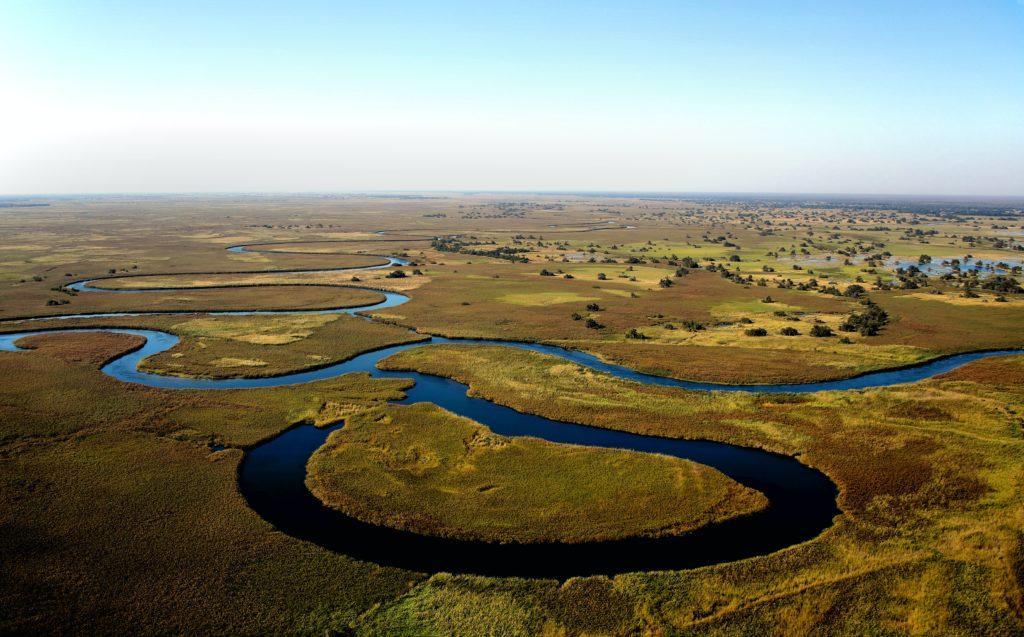
The Okavango Delta is a large inland delta in northwestern Botswana. Unlike major river deltas that eventually discharge into an ocean, the Okavango is an endorheic system. Its waters spread into the Kalahari Basin and are largely lost through evaporation, plant transpiration and seepage rather than flowing to the sea. UNESCO describes it as one of the world’s major inland delta systems without an outlet to the ocean.
The Delta contains permanent wetlands alongside seasonally flooded grasslands, islands, channels and dry terrestrial areas. Its size changes with the flood cycle, and Botswana Tourism notes that the wider Delta can vary considerably between drier and wetter periods.
What makes the landscape especially interesting is its position within the Kalahari.
You can have dry woodland and sandy ground a short distance from deep channels filled with clear water. An elephant may move from dry island vegetation into flooded grassland. A lion may use a dry island as a resting area while prey animals concentrate around nearby water and fresh grazing.
The Delta is therefore not one uniform wetland. It is a mosaic of habitats.
The northern Panhandle is more riverine, while farther south the system spreads into a complex network of channels, floodplains and islands. The southern and eastern portions connect with dryland areas and important wildlife habitats, including Moremi Game Reserve.
The Delta was inscribed as a UNESCO World Heritage Site in 2014 because of its exceptional ecological and hydrological importance.
For a safari traveller, however, the most important thing to understand is simple: water creates habitat, but the way that water arrives and moves through the Delta determines much of what you experience.
Why Choose an Okavango Delta Safari?
An Okavango Delta safari gives you the opportunity to experience several different types of African wilderness within one ecosystem.
You can spend a morning travelling quietly through a narrow channel in a mokoro, return to dry ground for lunch and later go out in a 4×4 to look for lions or elephants.
Another day may be dominated by birdlife and aquatic habitats. On another, the focus may be tracking an animal on foot.
That variety is one of the strongest reasons to choose the Delta.
Water and dry land together
The Delta’s channels and floodplains support aquatic plants, fish, birds, reptiles and mammals. At the same time, islands and higher ground provide dry habitats for terrestrial wildlife.
This creates a constantly changing visual landscape.
You may see:
- Elephants moving through shallow water
- Red lechwe feeding in flooded grasslands
- Hippos in deeper channels
- Crocodiles along waterways
- Lions resting on dry islands
- Buffalo moving between water and grazing areas
- African wild dogs travelling through woodland and floodplain
- Large numbers of waterbirds around shallow floodwaters
The exact wildlife and activity available depends heavily on the area, season and water conditions.
That is why I do not believe in treating all Okavango Delta safari tours as interchangeable.
Wildlife You Can See in the Okavango Delta
The Delta supports an impressive range of mammals, birds, reptiles and aquatic species. Botswana Tourism lists species including elephant, buffalo, lion, leopard, wild dog, hippo, crocodile, giraffe, zebra, several antelope species and a large variety of birds.
But a responsible safari guide should never tell you that a particular animal is guaranteed.
Wild animals are not performing for us.
Their movements depend on water, food, breeding cycles, territorial behaviour, weather and many other factors.
Elephants:
Elephants are one of the defining animals of the Okavango landscape.
They use both wet and dry habitats and can often be found moving between woodland, floodplains and water.
Watching elephants approach a channel or cross shallow floodwater is particularly rewarding because the water changes their behaviour and movement compared with a completely dry environment.
Lions:
The Okavango supports important lion populations, and lions may use dry islands, woodland and floodplain margins.
Finding lions is not simply about driving until you see one. Reading tracks, alarm calls, fresh signs and the behaviour of prey species can all help us decide where to search.
Leopards:
Leopards are naturally secretive and can be difficult to find even in excellent habitat.
They may use trees, woodland edges and areas close to water. Early mornings and late afternoons can be productive periods for searching, but there are no guarantees.
African Wild Dogs:
African wild dogs are among the most exciting predators to encounter in Botswana.
Their movements can be extensive, and finding them requires patience and a good understanding of recent tracks and sightings. They are not present in equal numbers throughout every part of the Delta.
Buffalo:
Buffalo are often associated with wetter areas where grazing is available.
Large herds can be impressive, but smaller groups and solitary bulls also occur.
Hippos and Crocodiles:
Permanent channels and deeper lagoons provide habitat for hippos and crocodiles.
A mokoro or boat safari can give you a very different perspective on these animals, but they must always be approached with the appropriate distance and under the control of an experienced guide or poler.
Antelope:
The Delta is particularly interesting for antelope because different species have adapted to different habitats.
Red lechwe are closely associated with wet environments and shallow floodplains. You may also encounter impala, kudu, waterbuck, reedbuck, tsessebe, wildebeest, zebra, giraffe, sable, roan and other species depending on the area.
Birds:
Birdwatching can be an excellent reason to visit the Okavango.
The combination of permanent water, seasonal floodplains, woodland and open grassland creates habitat for a remarkable range of resident and migratory birds. Botswana Tourism reports more than 400 bird species recorded in the Okavango region.
For serious birders, the choice of area and season can make a major difference.
Okavango Delta Safari Activities
One of the most important things to understand when comparing Okavango Delta safari packages is that not every camp or concession offers the same activities.
Activities depend on factors including:
- Whether the area is primarily water-based or land-based
- Seasonal water levels
- Park and concession regulations
- The location of the camp
- The safari operator
- Wildlife conditions
- Safety considerations
Before booking, always ask exactly which activities are available from the camp you are considering.
Game Drives:
Game drives remain one of the most effective ways to explore the terrestrial wildlife of the Delta.
A good game drive is not simply about covering kilometres.
I would rather spend time reading the landscape than drive past ten areas without really looking.
Tracks in sand, broken branches, dung, bird alarm calls, impala behaviour and even the direction in which animals are looking can all provide useful information.
Game drives are particularly valuable in areas where dry ground, woodland and floodplain habitats come together.
Night drives may be available in some private concessions but are generally subject to the rules and operating conditions of the particular area. They should not be assumed to be available everywhere.
Mokoro Safaris:
The mokoro is one of the most recognisable ways to experience the Okavango.
Traditionally, mokoros were dug from large tree trunks. Today, fibreglass versions are widely used because of conservation concerns surrounding the harvesting of suitable trees. Botswana Tourism describes the mokoro as a shallow-water canoe traditionally propelled by a standing poler using a long pole.
The experience is very different from a game drive.
There is no engine noise.
You move slowly through channels and shallow floodplains, often at water level with reeds, grasses and aquatic plants surrounding you.
A mokoro is particularly good for appreciating the smaller details of the Delta: dragonflies, frogs, water lilies, birds, tracks along the edge of channels and the changing reflections of the sky.
However, a mokoro is not primarily a predator-tracking activity. If your main goal is lions, leopards or wild dogs, you should build your safari around land-based activities as well.
Walking Safaris:
Walking changes the way you understand the bush.
From a vehicle, you naturally focus on larger animals. On foot, you begin noticing tracks, insects, plants, dung, birds and subtle changes in the ground.
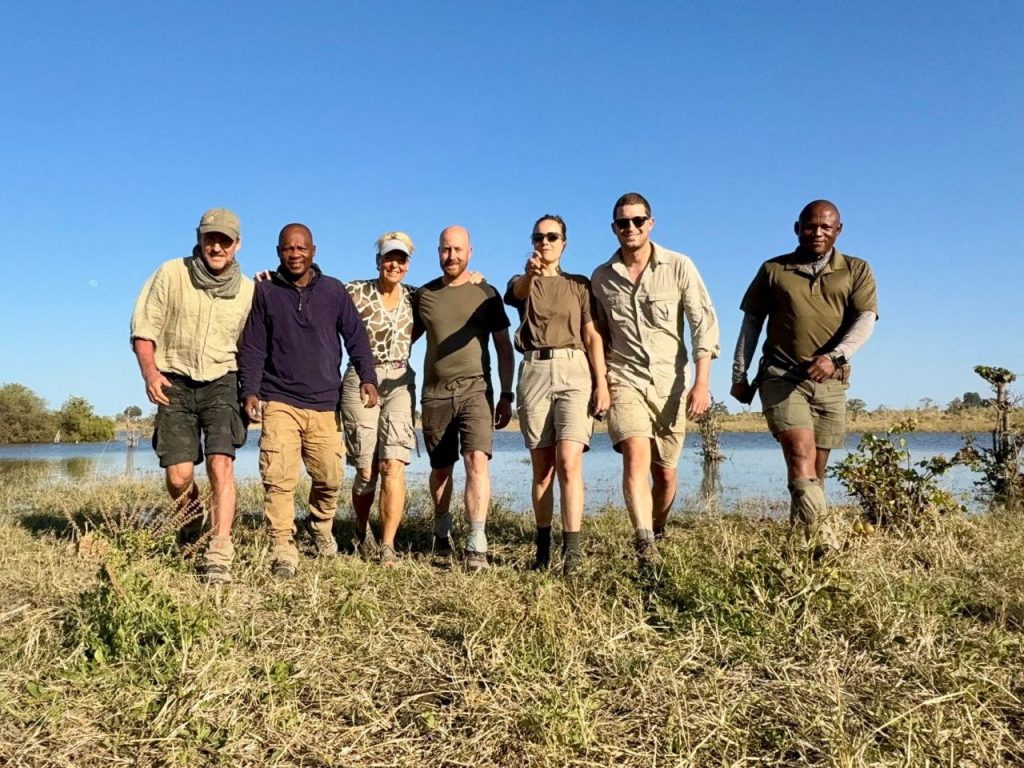
A walking safari must always be conducted under appropriate professional guidance and according to the rules of the area.
The exact walking opportunities vary between national parks, concessions and safari operations.
For me, walking is particularly valuable because it teaches guests how to read the environment rather than simply look for animals.
Boat Safaris:
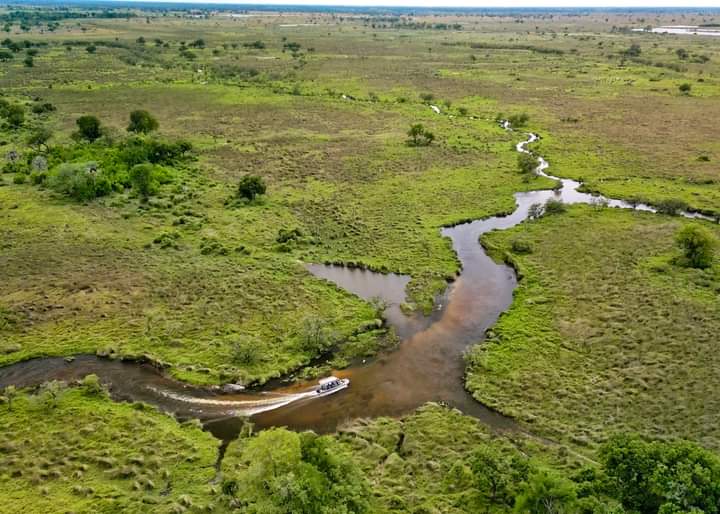
Where the water system and operation allow it, boat safaris provide another perspective.
Boats can cover greater distances than mokoros and are useful for exploring larger channels and lagoons.
They can be particularly rewarding for birdwatchers and photographers interested in aquatic landscapes, crocodiles, hippos and waterbirds.
Again, boat availability is location-dependent.
Wildlife Photography
Photography is one of the best ways to slow down on safari.
The Delta gives photographers a remarkable combination of subjects:
- Wildlife
- Birds
- Reflections
- Waterways
- Landscapes
- Backlighting
- Mist and atmospheric conditions
- Golden-hour scenes
- Mokoro perspectives
But good safari photography starts with animal behaviour, not camera equipment.
If you understand where an animal is likely to move, how it is reacting, and what the light is doing, you can often make a better photograph with a modest camera than someone with expensive equipment who is rushing.
Best Time to Visit the Okavango Delta
There is no single month that is best for every traveller.
The right time depends on whether your priority is wildlife concentration, high water, photography, birding, landscapes, walking, boating, fewer visitors or a particular safari style.
Botswana has a broad dry season and green season, but the Okavango adds another layer because the annual flood does not simply follow local rainfall. Botswana Tourism describes the dry-season period as a time when local pools dry while Okavango river systems can fill with floodwater, concentrating wildlife in some areas.
A simplified seasonal guide
| Period | Typical conditions | Particularly interesting for |
| November–March | Rainfall, green vegetation, young animals, migrant birds | Birding, landscapes, photography |
| April–May | Rain decreases; floodwaters begin becoming increasingly important | Changing landscapes and transitional safaris |
| June–August | Dry conditions locally, major flood influence in many areas | Wildlife viewing, water activities, photography |
| September–October | Very dry in many areas; heat increases | Wildlife, water-dependent viewing, photographic light |
These are broad patterns, not fixed rules.
The timing and strength of the flood vary from year to year, and conditions differ across the Delta.
Understanding the Okavango Flood
This is the part of the Okavango story that I believe every visitor should understand before arriving.
When people hear “flood”, they often imagine heavy rain falling over Botswana and filling the Delta.
That is not the main story.
The most important annual flood pulse originates much farther north.
Rainfall in Angola
During the Southern African rainy season, significant rainfall falls over the Angolan highlands within the Cubango-Okavango catchment.
That water enters the river system.
The river is known as the Cubango in Angola and becomes the Okavango as it enters Botswana.
The water travels south
The floodwater moves gradually through the river system.
It does not arrive in Botswana immediately after the rain falls in Angola.
The journey takes time.
This delay is one of the reasons the Okavango’s flood cycle is so unusual from a safari perspective.
The flood reaches Botswana during the dry season
As the flood moves into Botswana, the Delta begins to fill.
The remarkable point is that this generally happens during Botswana’s dry winter period.
UNESCO identifies this annual dry-season flooding as one of the defining ecological characteristics of the Okavango.
A simple way to understand the process is:
Rainfall in the Angolan highlands → Cubango-Okavango River → Botswana → channels and floodplains → seasonal wetland expansion → changing wildlife distribution.
The water moves across a remarkably flat landscape.
Because the gradient is extremely low, the flood spreads gradually through channels, floodplains and islands rather than behaving like a fast-moving river.
Why does the flood not simply disappear?
Much of the water is lost through evaporation and evapotranspiration, as well as infiltration into the ground.
The Delta is therefore constantly balancing inflow against these natural losses.
The Okavango Delta Management Plan records long-term variability in annual inflows, demonstrating that the amount of water arriving in the Delta is not identical every year.
This is why I always tell guests that “high-water season” should not be treated as a guaranteed timetable.
Nature does not work according to a tourism calendar.
Why this matters for wildlife
Floodwater changes where animals can feed and drink.
As some areas become flooded, other areas become increasingly important as dry ground.
Fresh water and new grazing can influence the distribution of herbivores, while predators respond to the distribution and behaviour of their prey.
The relationship is not as simple as “more water means more animals.”
It is more accurate to think of the flood as continually rearranging the habitat.
That is what makes an Okavango Delta safari experience different from one season to another.
Okavango Delta During the Dry Season
The dry season is one of the most popular periods for an Okavango Delta wildlife safari.
The surrounding environment becomes progressively drier, while the seasonal flood can be expanding through parts of the Delta.
This creates a striking contrast.
Dry woodland and sandy ground sit alongside clear channels and flooded grasslands.
Wildlife can become easier to locate in some areas because water and food resources become more concentrated. However, this varies considerably according to the habitat and location.
The dry season also generally provides clearer skies and lower rainfall, which can be excellent for photography.
Morning temperatures can be cold, especially in open vehicles, while afternoons can become warm and the hottest months can be intense.
What I particularly like about this period
For me, the attraction is the contrast.
You can wake up in a dry landscape, travel into floodwater later in the day and then watch the sun go down over a wetland that exists in the middle of the Kalahari.
That contrast is the character of Botswana.
Okavango Delta During the Green Season
The green season is often misunderstood because some travellers assume that “rainy season” means poor safari conditions.
It does not.
It means a different safari.
Rain transforms the landscape.
Grass becomes greener, trees develop fresh foliage, clouds build in the afternoon, and the quality of the light can become spectacular.
Botswana Tourism notes that the green season brings lush vegetation, young animals and strong birding opportunities as migratory species arrive.
For photographers, I particularly enjoy the combination of green vegetation and dramatic skies.
There can also be fewer visitors in some areas compared with peak periods, although this varies by camp and concession.
Rain can affect road conditions, and some safari activities may become more weather-dependent.
But if you enjoy birds, landscapes, young animals and dramatic weather, the green season deserves serious consideration.
Where to Stay in the Okavango Delta
Choosing where to stay is one of the most important decisions when planning an Okavango Delta holiday.
The Delta is too large and diverse to treat every camp as offering the same experience.
Safari lodges
Permanent lodges and camps can offer a high level of comfort, professional hospitality and a fixed base from which to explore the surrounding area.
They are particularly suitable for travellers who want comfort and a structured safari experience.
Tented camps
Tented camps can range from simple mobile-style accommodation to highly serviced permanent camps.
The word “tent” should not automatically make you think of rough camping.
The accommodation standard varies considerably.
Mobile safaris
A mobile safari is a different proposition.
Instead of remaining in one permanent lodge, the camp can move between areas as part of an itinerary.
This style can give you a stronger sense of travelling through the landscape.
At San and Nature, mobile tented safaris are an important part of our operation, with purpose-designed guest tents, camp infrastructure and safari vehicles suited to mobile operations.
National parks and private concessions
The distinction between a national park or reserve and a private concession matters.
Different areas can have different rules regarding activities, vehicles, walking and night drives.
Moremi Game Reserve, for example, protects a mixture of wetland and dry habitats on the eastern side of the Delta and forms an important part of the wider Okavango safari landscape.
Private concessions can offer different safari conditions and activity combinations.
The important thing is not to choose an area simply because it has a famous name. Choose it because it matches the safari you want.
How Many Days Do You Need in the Okavango Delta?
There is no universal answer.
A traveller combining the Delta with Chobe, Moremi, the Central Kalahari or Victoria Falls may allocate only several nights to the Delta.
Someone travelling specifically for wildlife photography may want considerably longer.
A first-time visitor should think in terms of nights rather than simply days.
A short stay can introduce you to the Delta, but staying longer gives you more opportunity to experience different habitats and changing conditions.
As a general planning principle:
- 2–3 nights: A useful introduction if your overall Botswana itinerary is limited.
- 4–5 nights: Allows a more relaxed Delta experience and greater flexibility.
- 6–8+ nights: Better suited to photographers, serious wildlife enthusiasts and travellers who want to explore different areas or combine land and water activities.
If you have a strong interest in photography, walking or birding, tell your safari operator before the itinerary is built.
The itinerary should be designed around your interests rather than simply filling a standard number of nights.
Okavango Delta Safari Cost
The cost of an Okavango Delta safari can vary dramatically.
There is no honest single price that applies to every traveller.
The main factors include:
- Number of nights
- Type of accommodation
- Private or shared safari
- Mobile safari or permanent camp
- Location and concession
- Charter flights
- Road transfers
- Activities
- Season
- Group size
- Guide requirements
- Photography or specialist guiding
- Level of camp service
- Internal logistics
Remote safari camps are expensive to operate because almost everything has to be transported into wilderness areas.
Food, fuel, staff, equipment, aircraft logistics, camp infrastructure and waste management all have to be managed over considerable distances.
This is one reason an Okavango safari should not be compared purely by room price.
Two camps at apparently similar rates can offer very different guiding, access, activities and overall safari structures.
When comparing Okavango Delta safari packages, ask what is actually included.
A proper quotation should make it clear whether accommodation, meals, drinks, transfers, park fees, activities and flights are included.
Okavango Delta for Photographers
The Okavango is one of the most varied photographic environments in Botswana.
You are not limited to photographing animals.
The landscape itself becomes a subject.
Early morning light can turn waterways into reflections. Low evening light can separate elephants from the background. A mokoro can provide a very low perspective that makes reeds and channels look completely different from a vehicle-based view.
Bring the right lenses
For wildlife, a telephoto lens is useful.
A 100–400mm or similar zoom is versatile for many safari situations, while longer focal lengths can be useful when conditions allow.
A wider lens is equally valuable for landscapes, elephants at close but safe range, mokoro scenes and environmental portraits of wildlife.
You do not need to carry every lens you own.
Shoot early and late
The first and last hours of the day often provide the most attractive light.
Midday can still produce good wildlife photographs, particularly when animals are active or when clouds create interesting conditions, but harsh overhead sunlight is less forgiving.
Do not chase the photograph
This is one of the most important principles I teach photographers.
If an animal is moving away, let it move.
If the vehicle needs to reposition, do it slowly and responsibly.
Do not ask a guide to pressure an animal simply to improve a photograph.
A good photograph is not worth disturbing wildlife.
Use the landscape
Do not photograph every animal as a tight portrait.
Sometimes the strongest image is the elephant surrounded by floodwater.
Sometimes it is a lion disappearing into golden grass.
Sometimes it is simply a bird sitting against a clean background.
The Delta gives you opportunities to show animals as part of their environment.
That is something I value greatly in wildlife photography.
Planning Your Okavango Delta Safari
Good planning begins long before you arrive in Maun.
1. Decide what type of safari you want
Ask yourself what matters most.
Do you want:
- Predators?
- Elephants?
- Birds?
- Photography?
- Walking?
- Mokoro excursions?
- Boats?
- Luxury accommodation?
- Mobile camping?
- A private guide?
- A family safari?
- A combination of several destinations?
The answers should influence your itinerary.
2. Choose the season
Do not simply choose July because somebody told you it is “the best month.”
Understand what you want to see and what conditions you prefer.
The best month for a photographer interested in green landscapes may not be the best month for somebody primarily interested in dry-season wildlife concentration.
3. Consider how you will reach the Delta
Most international travellers enter Botswana through an international gateway and connect through to Maun or another appropriate gateway depending on their itinerary.
From Maun, many remote safari areas are accessed by light aircraft.
Road transfers are also used where appropriate.
Your operator should explain the transfer arrangements before you travel.
4. Understand luggage restrictions
If your itinerary includes light aircraft transfers, luggage allowances can be more restrictive than on international flights.
Soft-sided luggage is commonly preferred for small aircraft operations, but the exact allowance depends on the carrier and itinerary.
Always confirm the current allowance with your operator before packing.
5. Bring binoculars
Even if photography is your main interest, bring binoculars.
There are many moments when an animal is visible but too far away for a satisfying photograph.
A pair of good binoculars can make the difference between seeing a bird and actually understanding what you are looking at.
6. Pack for changing conditions
Botswana can have cold mornings, hot afternoons and significant seasonal variation.
Useful items include:
- Neutral-coloured lightweight clothing
- Warm layers for early mornings
- Hat
- Sunglasses
- Sunscreen
- Insect repellent
- Comfortable closed footwear
- Binoculars
- Camera equipment
- Spare batteries
- Memory cards
- Small torch or headlamp
- Personal medication
- Travel documents
Always ask your operator for a current packing list, especially if you are travelling by light aircraft.
7. Choose the operator carefully
This is where experience matters.
Ask:
- Who will guide me?
- Is the safari private or shared?
- Which area will I stay in?
- Which activities are available?
- How are transfers handled?
- What is included in the price?
- What happens if water levels change?
- Does the operator have experience with photographers?
- How does the company approach conservation and responsible wildlife viewing?
The cheapest quotation is not automatically the best value.
Responsible Tourism in the Okavango Delta
The Okavango is a sensitive ecosystem.
Tourism depends on the health of the wetland, wildlife populations and surrounding communities.
Responsible safari operations therefore matter.
Good wildlife viewing means maintaining appropriate distances, following area regulations, avoiding unnecessary disturbance and allowing animals to behave naturally.
Do not ask your guide to drive off-road where it is prohibited simply for a photograph.
Do not encourage a guide to approach an animal too closely.
Do not feed wildlife.
And do not assume that a good safari is measured by the number of animals you can photograph.
Sometimes the most responsible thing a guide can do is leave an animal alone.
Tourism also provides economic value to conservation and communities. Community involvement and local employment are important parts of maintaining a viable conservation landscape.
At San and Nature, being locally based is important to us. We are a Botswana citizen-owned safari company operating from Maun, and our work is closely connected to the landscapes and communities in which we operate.
Why Experience Matters on an Okavango Safari
There is a major difference between seeing the Okavango and understanding it.
Anybody can point at an elephant.
A good guide should be able to explain why the elephant is using that particular area, what the tracks tell us, where it may be heading and what else is happening around it.
My background is rooted in Botswana’s bush and in knowledge passed down through my San heritage.
I learned from an early age to pay attention to tracks, plants, water, wind and animal behaviour. I later developed those skills through professional guiding and years of working with guests in Botswana’s wilderness.
I also bring photography into my guiding.
I won Botswana’s Photographer of the Year competition, and photography has taught me to observe wildlife differently. I look at light, background, behaviour and positioning, but I also know that the photograph must never become more important than the animal.
That is how I guide.
I want guests to leave Botswana knowing more than they knew when they arrived.
Combining the Okavango With Other Botswana Destinations
An Okavango Delta safari can be the centrepiece of a longer Botswana itinerary.
Botswana is particularly rewarding because its ecosystems change dramatically over relatively short distances.
You can combine the Delta with:
Moremi Game Reserve
Moremi gives you an important combination of wetland, woodland and open habitats and is an excellent complement to the wider Okavango experience.
Chobe National Park
Chobe offers a very different wildlife environment, particularly around the Chobe River and the northern parts of the park.
A combined Delta and Chobe itinerary can give you both wetland landscapes and riverine wildlife viewing.
Central Kalahari Game Reserve
The Central Kalahari is a completely different world.
Instead of navigating a wetland, you are travelling through an arid Kalahari environment where understanding the desert and its seasonal changes becomes essential.
Combining the Delta with the Kalahari is one of my favourite ways to show international visitors how diverse Botswana really is.
For travellers planning a wider Botswana Safari, I normally recommend thinking about the country as a collection of different ecosystems rather than trying to visit as many famous names as possible.
Final Thoughts on an Okavango Delta Safari
An Okavango Delta Safari becomes much more meaningful when you understand what is happening beneath the surface.
The Delta is not simply a wetland.
It is a living system connected to rainfall in the Angolan highlands, river flow, seasonal flooding, evaporation, vegetation, wildlife movements and human conservation efforts.
The flood arrives during a period when much of Botswana is becoming dry.
Channels fill.
Floodplains change.
Animals respond to changes in food and water.
Birds use the wetlands.
Predators follow prey.
And safari activities change with the landscape.
That is what makes an Okavango safari different.
For me, the real value of guiding here is not simply finding a lion or photographing an elephant.
It is helping someone understand why the lion is there, why the elephant has chosen that route, why a particular floodplain is green, why the water arrived when it did, and how the entire system is connected.
That understanding stays with you long after the safari is over.
Whether you are planning your first Safari in the Okavango Delta, returning as an experienced safari traveller, travelling with family, coming specifically for photography or looking for a more adventurous walking and mobile safari, the itinerary should be built around your interests.
There is no single Okavango Delta safari that is right for everybody.
Plan Your Okavango Delta Safari With San and Nature
At San and Nature, I personally believe the best safari begins with listening to the traveller.
Tell me when you want to come, what wildlife interests you most, whether photography is important to you, whether you want to walk or explore by mokoro, what level of accommodation you prefer, how many people are travelling, and what kind of budget you have.
From there, we can build a practical itinerary around the conditions and the experience you are looking for.
San and Nature is Botswana-based and locally owned, and I personally bring years of professional guiding, tracking and wildlife photography experience to the safari. My approach is rooted in the knowledge I learned growing up in Botswana and in the professional experience I have gained guiding travellers from around the world.
If you are ready to start planning, visit San and Nature and contact us for a personalised Okavango Delta safari quotation.
San and Nature
Maun, Botswana
Email: res@sanandnature.com
Phone: +267 680 0882
WhatsApp: +267 71 904 819
Your dates, interests, preferred activities, accommodation style and budget should shape the safari. We will help you decide where to go, when to go and how to experience the Okavango in a way that makes sense for you.